

If you've ever ordered a custom or high-quality jewelry box as a gift, you've probably noticed that the wood makes a bigger difference than you'd think. I've been running a wooden jewelry gift box supply business for over 8 years, and let me tell you-choosing the right wood isn't just about looks. It's about protecting the jewelry inside, how the box holds up over time, and even the first "feel" someone gets when they open it. A cheap, flimsy wood box can make even the most expensive necklace feel like an afterthought, while a well-crafted wooden box turns a piece of jewelry into a heirloom. Today, I'm breaking down the most common types of wood we use (and why we pick them) for our boxes, plus why each works for different kinds of gifts.
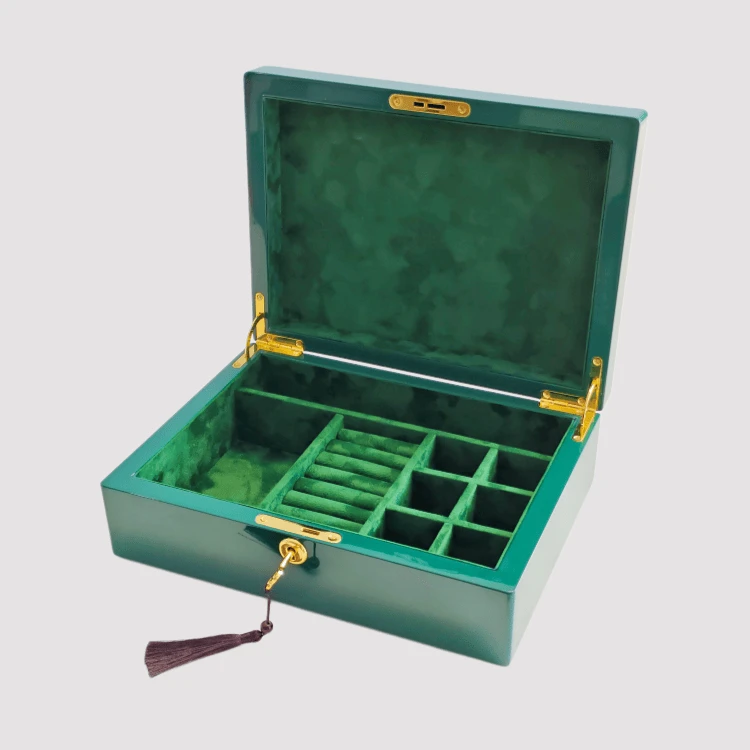
First up, let's talk about the workhorse of our line: pine. Wait, I know what you're thinking-pine sounds cheap, right? But not all pine is created equal. We use solid white pine, which is soft, lightweight, and super easy to work with. It takes paint and stain really well, which is why you'll see so many budget-friendly custom gift boxes made from it. For example, our Luxury Emerald Green High-Gloss Wooden Jewelry Box is made with a pine core. The smooth surface of pine lets us apply that high-gloss finish without any grain showing through, and it's durable enough for regular use-no chipping or warping, even if someone tosses it in a luggage for a weekend trip. The only downside? Pine is pretty porous, so we have to line every single box with velvet or felt to keep jewelry from getting scratched. That's why most pine boxes have that soft interior, like our Blue Jewelry Box With Velvet Lining, which pairs the easy-to-paint pine with a lush velvet inside that's gentle on rings, earrings, and necklaces.

Next, oak. If you want a box that's built to last a lifetime, oak is your guy. We primarily use white oak, not red oak, because it's denser and more water-resistant. I've had customers tell me their oak jewelry boxes have been passed down three generations-seriously, that's how tough this wood is. Oak has a distinct, beautiful grain that doesn't need much extra finishing; we just sand it smooth and add a clear coat to make it shine. The grain is so noticeable that even simple oak boxes look fancy, so they're perfect for formal gifts, like a wedding band set or an anniversary necklace. Another thing I love about oak? It's heavy enough to feel solid, but not so heavy that someone's going to complain about taking it on vacation. If you need a box that balances durability and style, oak is the way to go.
Then there's walnut. This is the wood we get the most compliments on, hands down. Walnut has a rich, warm tone that's neither too light nor too dark-it's that perfect middle ground that works with any decor, from a modern apartment to a traditional home. It's also super dense, so it's scratch-resistant and holds its shape for years. We use walnut for most of our premium lines, and it's the wood behind our Wooden Necklace Jewelry Box, which is designed to hold long necklaces without tangling. The grain on walnut is tighter than oak, so it's easier to apply different finishes-matte, satin, high-gloss, you name it. We've even had customers ask for walnut boxes to be engraved with names or dates, and the wood takes engraving so well that the text pops, making it a super personal gift. The only thing to note about walnut is that it's a bit more expensive than pine or oak, but trust me-your customers will be willing to pay extra for that luxurious look and feel.
Wait, can I talk about a wildcard? Mango wood. It's become super popular in the last 5 years, and for good reason. Mango wood is a byproduct of the fruit industry-once a mango tree stops producing fruit, it's harvested for wood, so it's sustainable, which is a big selling point for a lot of our eco-conscious customers. It has a unique, light grain with subtle variations that make every box one-of-a-kind-no two mango wood boxes look exactly alike. It's also lighter than oak or walnut, so it's great for smaller gift boxes, like earring sets or pendant boxes. We use mango wood for our Fancy Wood Jewelry Box because it has that unique aesthetic that stands out without being too over-the-top. The only catch is that mango wood is softer than oak or walnut, so it's best for occasional use-great for gifts that won't be opened every day, not so much for daily jewelry storage.
Now, let's touch on what we don't use. We skip particleboard and MDF, even though they're cheaper. Particleboard is made from wood chips glued together, and it falls apart after a few years-one of our customers came back with a particleboard box where the lid had cracked just 6 months after buying it, and that's the last straw for us. MDF is denser but super heavy, and it doesn't take finishes well; it often chips or peels. We only use solid wood for every single box, even our more affordable ones, because we want the quality to match the jewelry inside.


A quick pro tip for anyone buying these boxes as gifts: think about what kind of jewelry the box will hold. If it's a delicate necklace or a pair of earrings, pine with a velvet lining is perfect-it's affordable and looks great. If it's a wedding band set or a heirloom piece, oak is unbeatable for durability. If it's a premium gift for someone who loves nice things, walnut is the way to go. And if you want to lean into sustainability, mango wood is a unique, on-trend choice.
Our line up has all these woods, plus other custom options-we can mix finishes, add clear lids, like our Clear Lid Jewelry Box, so you can see the jewelry inside before opening, or engrave any design you want. Every box we make is built to protect jewelry and make the gifting experience special.
If you're a boutique owner, event planner, or just someone who needs a bulk order of wooden jewelry gift boxes, we're here to help. We work with small and large orders, can adjust sizes to fit different pieces, and can help you pick the perfect wood for your specific needs. Drop us a line to start a conversation about what you're looking for-we'd love to collaborate with you.
References:
- Forest Products Laboratory. (2010). Wood Handbook: Wood as an Engineering Material. U.S. Department of Agriculture.
- National Wood Flooring Association. (2022). Solid Wood Species Guide: Properties and Uses for Consumer Goods.
- Sustainable Furnishings Council. (2021). The Rise of Mango Wood: Byproduct Utilization in the Wood Industry.
- Jewelry Box Manufacturers Association. (2023). Best Practices for Wood Selection in High-Quality Jewelry Packaging.